 Monderma
- 29 Mar 2025
- Vitiligo causes gradual pigment loss
- Genetics and stress influence onset
- Autoimmunity shapes many cases
- Treatments help but no cure exists
- Supporting skincare offered by Monderma
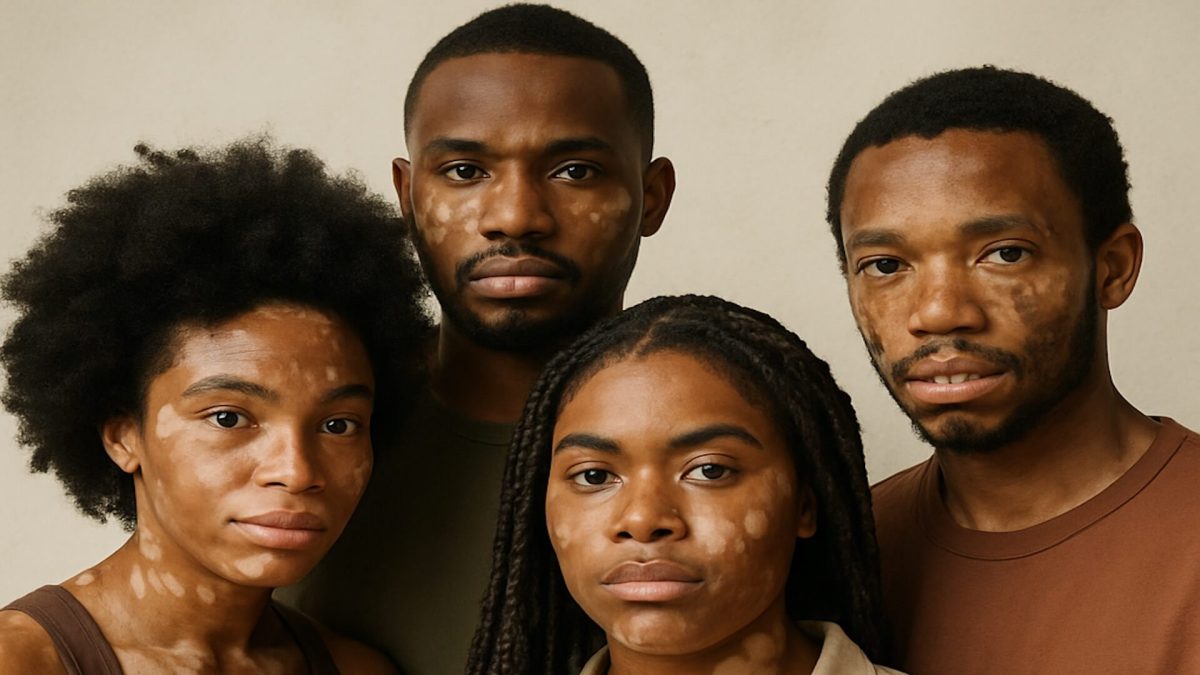
Vitiligo creates pale patches that change the look of the skin, and many notice shifts in confidence and comfort when new areas appear or existing ones grow [1,2].
In this article, we explore vitiligo causes, vitiligo symptoms, and vitiligo treatment in a simple and supportive way for readers seeking clearer guidance.
Causes Of Vitiligo
Vitiligo develops when melanocytes stop producing pigment, which leads to pale areas that may appear gradually or quickly across different regions [1,2].
Researchers study oxidative stress, genetic influences, and immune activity to understand why these cells become vulnerable in some people.
Autoimmune Theory
Autoimmune activity may cause the immune system to target melanocytes. This pattern is seen in some people and suggests a shared link with other immune concerns [1,2].
Associations with thyroid issues support this idea, showing how overlapping immune pathways can shape symptom patterns in vitiligo [4].
Genetic Factors
Family history increases risk, and researchers have identified gene loci that explain why some people are more susceptible to pigment loss than others [2,3].
These findings support the idea that genes can influence timing and progression while interacting with environmental triggers.
Environmental Factors
Environmental triggers such as sunburn, trauma, or chemical exposure can influence onset in susceptible people by stressing already vulnerable cells [2,5].
Emotional stress may also affect the condition by disrupting immune balance, which some notice during challenging periods [4].
Summary Table: Causes Of Vitiligo
| Cause | Description |
|---|---|
| Autoimmune activity | Immune changes affect melanocytes [1,2] |
| Genetic predisposition | Family history increases risk [2,3] |
| Environmental triggers | Trauma and sunburn may worsen [2,5] |
| Oxidative stress | Inflammatory imbalance affects pigment [1,4] |
| Psychological stress | Stress may aggravate symptoms [4] |
Table 1: Causes of vitiligo
Vitiligo Symptoms
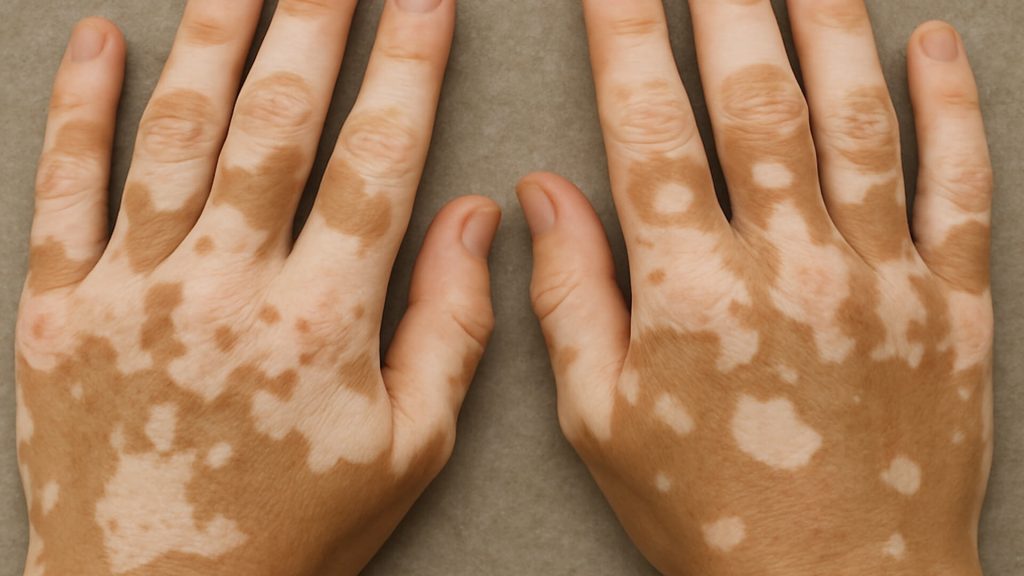
Vitiligo symptoms often begin with pale or white patches that develop on areas such as the face, hands, legs, and trunk [1,2].
Some people also notice early greying in hair on the scalp, lashes, or brows, which may help with early recognition and support [1,2].
Types Of Vitiligo
Generalised vitiligo affects both sides of the body. Segmental vitiligo appears on one side. Focal vitiligo presents as isolated patches that may remain stable.
These types help clinicians understand expected behaviour and guide the approach to long term management.
Summary Table: Vitiligo Symptoms
| Symptom or sign | Description |
|---|---|
| Depigmented patches | Pale areas on exposed regions [1,2] |
| Symmetry patterns | Generalised, segmental, or focal [1,2] |
| Premature greying | Hair colour changes in affected areas [1,2] |
| Mucosal involvement | Paleness inside the mouth [2] |
| Variable onset | Gradual or sudden appearance [1,2] |
Table 2: Symptoms of vitiligo
Vitiligo Treatment
Vitiligo does not affect physical health, but it can influence confidence, which makes supportive management helpful for long term comfort [2,6].
Understanding the type and severity helps guide care in ways that feel manageable and aligned with personal goals [6].
Topical Corticosteroids
Topical corticosteroids may help restore pigment when used early and consistently under clinical guidance [1,2].
These creams support colour return by calming immune activity and easing inflammation in affected areas.
Phototherapy
Phototherapy with narrowband UVB stimulates remaining melanocytes through controlled light exposure that encourages pigment formation [7].
Regular attendance helps improve results, and combining light treatment with topical care offers extra support.
Surgical Options
Surgery may assist stable vitiligo by placing melanocytes or small pieces of pigmented skin into pale areas to encourage new pigment [2].
These approaches require planning and are used when other treatments have not helped enough.
Emerging Therapies
JAK inhibitors are being studied for their ability to influence immune pathways linked to pigment loss and show early promise [8].
These options may support future personalised care as research progresses.
Summary Table: Vitiligo Treatment
| Treatment type | Description |
|---|---|
| Topical corticosteroids | Early use supports colour return [1,2] |
| Calcineurin inhibitors | Useful on delicate areas [1] |
| Phototherapy | Narrowband UVB encourages pigment [7] |
| Surgical options | Grafting may help stable cases [2] |
| JAK therapies | Immune targeted treatments in study [8] |
| Psychological support | Helps with emotional wellbeing [6] |
Table 3: Treatments for vitiligo
Monderma Offerings For Skin Concerns
Monderma supports concerns such as acne, ageing skin, hyperpigmentation, and rosacea through personalised prescription skincare.
Ingredients such as adapalene, azelaic acid, clindamycin, hydroquinone, ivermectin, niacinamide, and tretinoin may be selected to support individual needs.
Conclusion
Vitiligo has many influences, and treatments continue to evolve through ongoing study that aims to improve support for those living with the condition.
Readers seeking tailored guidance can explore options through our skin consultation, which provides personalised support for general long term skincare.
Content is for informational purposes only. Monderma treatments are prescribed following consultation. Results and timeframes can vary. Use as directed by your prescriber.
References
- NICE Clinical Knowledge Summaries. Prevalence Background Information Vitiligo CKS
- NHS. Vitiligo
- Eleftheriadou V, Delattre C, Chetty Mhlanga S, et al. Burden Of Disease And Treatment Patterns In Patients With Vitiligo
- Hu Z, Chen D, et al. Beyond Skin White Spots Vitiligo And Associated Comorbidities
- Njoo MD, Das PK, Bos JD, Westerhof W. Association Of The Koebner Phenomenon With Disease Activity And Therapeutic Responsiveness In Vitiligo Vulgaris
- Ezzedine K, Eleftheriadou V, Jones H, et al. Psychosocial Effects Of Vitiligo
- Majid I, Imran S, et al. Efficacy Of Targeted Narrowband Ultraviolet B Therapy In Localised Vitiligo
- Fang Y, Li Y. Advances In Vitiligo Update On Therapeutic Targets
Join the Newsletter
Insights that make your skin feel understood
Share this article if you found it helpful



More To Explore
Latest Articles For Your Skin
-
Understanding Pityriasis Rosea: Symptoms & Treatment
-
How To Spot Fake Skincare Products Online

-
CBD Skincare For Calming Redness & Irritation

-
How Fractional Laser Can Renew Damaged Skin
-
Wearable Sensors Used For Skin Condition Tracking

-
Ectoine: Skincare & Eye Care Barrier Protection
-
Baby Acne Myths & Facts Explained

-
Niels Ryberg Finsen: Pioneer Of UV Phototherapy
-
Allantoin Uses & Benefits For Daily Skincare

-
Chapped Lips: Causes & How To Treat Them