 Monderma
- 14 Mar 2025
- Sun spots link to UV exposure
- Freckles relate to genetic traits
- Sun spots stay through all seasons
- Freckles fade when light reduces
- Skin clarity supported with Monderma
Sun spots and freckles can look similar at first glance, yet their causes differ, which makes clear understanding helpful for people who want to support their skin health [1].
This article explains how sun spots form, how freckles develop, how they differ, and how evidence based care can support pigmentation concerns in daily routines [1,2].
What Are Sun Spots?
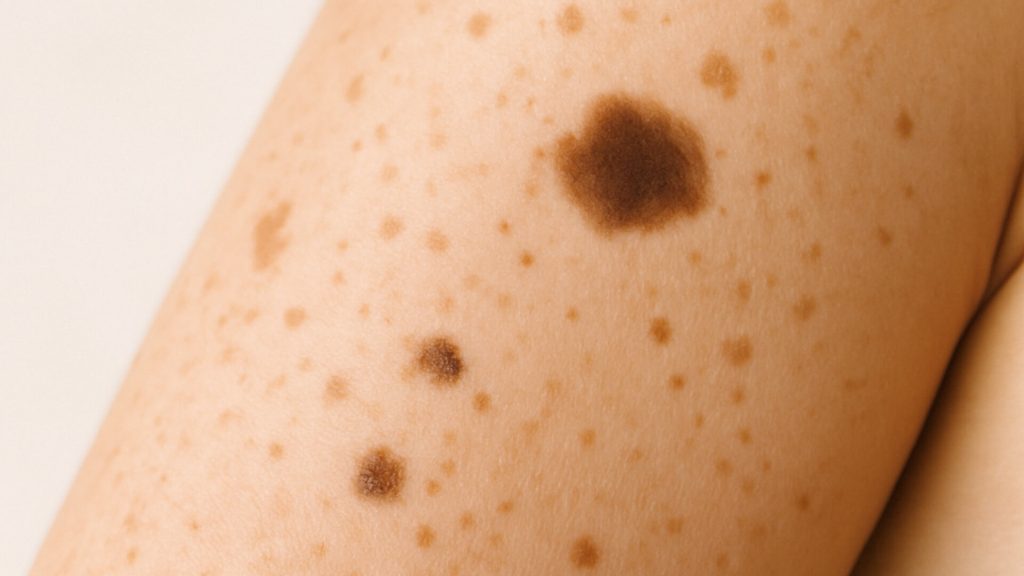
Sun spots are flat brown marks caused by cumulative ultraviolet light exposure, often seen on the face, hands, and arms in people with long term outdoor exposure [1].
They are also known as solar lentigines and are linked with higher lifetime ultraviolet exposure, especially after middle age, when pigment cells respond more strongly [1].
Guidance from NHS notes that people with several pigmented marks should check their skin regularly to monitor changes [2].
How Sun Spots Form
Sun spots develop when ultraviolet light increases melanin production in localised patches, creating darker areas that remain stable across seasons [1].
Research in The Journal of Investigative Dermatology shows that long term ultraviolet exposure is a major driver of solar lentigines, especially in adults over forty [1].
What Are Freckles?
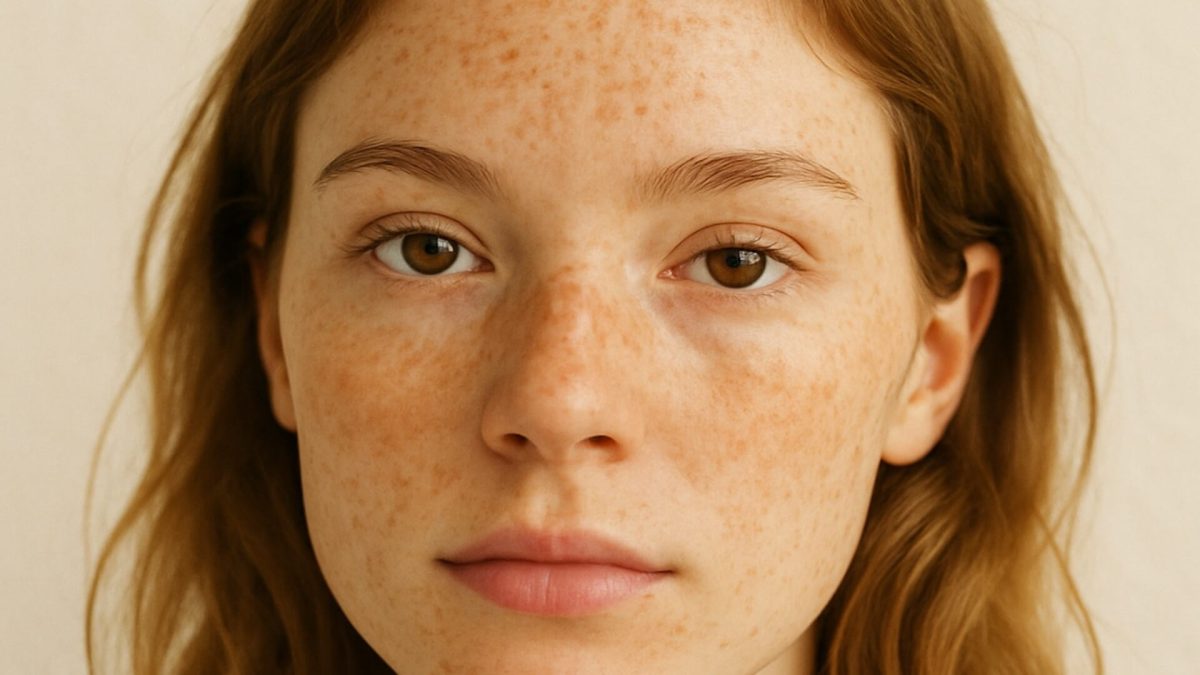
Freckles are small light brown marks that appear in people with a genetic tendency toward uneven melanin distribution, especially in fair skin types [3].
These marks become more visible with sunlight but often fade during winter, which makes their appearance more seasonal compared to long lasting sun spots [3].
A review from StatPearls reports that freckles are linked to MC1R gene variations and are considered harmless [3].
Sun Spots & Freckles Compared
| Feature | Key Notes |
|---|---|
| Cause | Sun induced pigment change from ultraviolet light [1] |
| Cause | Genetic variation influencing melanin visibility [3] |
| Seasonal change | Sun spots remain stable across seasons [1] |
| Seasonal change | Freckles fade during winter and brighten with sunlight [3] |
| Typical age | Sun spots common in adults over forty [1] |
Table 1: Key differences between sun spots and freckles
Moles & Freckles
Moles differ from freckles because they involve clusters of pigment cells that can be flat or raised and may change gradually over time [4].
A study published in Arch Dermatol found that transformation of moles into melanoma is rare, although regular checks remain helpful for safety [4].
Preventing Sun Spots & Freckles
Daily use of broad spectrum sunscreen supports prevention of both sun spots and freckles by reducing ultraviolet exposure that drives pigmentation change [5].
Guidance from NICE advises reapplying sunscreen every two hours when outdoors for reliable protection [5].
Wearing protective clothing, seeking shade during peak sunlight, and avoiding artificial ultraviolet sources such as sun beds supports long term skin health [2,5].
Treatments For Sun Spots
Topical options include hydroquinone, tretinoin, and niacinamide, which can reduce pigment and support a more even skin tone when used consistently with guidance [6].
A study in J Dermatolog Treat reported that four percent hydroquinone reduced pigmentation within twelve weeks in controlled conditions [6].
Professional care such as chemical peels, laser treatment, or cryotherapy may also help reduce visible sun spots in appropriate settings [7].
Reviews in Clin Cosmet Investig Dermatol note improvement with laser based treatments for solar lentigines, although suitability varies by skin type [7].
Monderma & Pigmentation Support
Monderma provides personalised prescription skincare for acne, hyperpigmentation, rosacea, and wrinkles, using ingredients selected to support tone and clarity.
Formulations may include tretinoin, niacinamide, or hydroquinone, which can help address unwanted pigment when used as part of a personalised plan [6,11,12].
Assessment through a structured online review allows clinicians to recommend ingredients that align with your skin type, goals, and tolerance.
Conclusion
Sun spots arise from long term ultraviolet exposure, while freckles relate to genetic traits that become more visible in sunlight and soften during winter [1,3].
Understanding these differences supports clearer skincare choices, especially when changes in pigmentation appear gradually or feel difficult to interpret [1,2].
Evidence based ingredients can support tone and texture, and protective habits form an essential part of any long term routine for maintaining skin comfort [5,6].
People with pigmentation concerns often benefit from guidance, especially when signs are persistent or linked with past ultraviolet exposure [1,5].
You can explore tailored care for your skin through our personalised consultation service.
Content is for informational purposes only. Monderma treatments are prescribed following consultation. Results and timeframes can vary. Use as directed by your prescriber.
References
- Monestier S, Gaudy C, Gouvernet J, Richard MA, Grob JJ. Multiple senile lentigines of the face. J Invest Dermatol. 2006.
- NHS. Skin cancer non melanoma guidance.
- StatPearls. Melanocytic Nevi.
- Tsao H, Bevona C, Goggins W, Quinn T. Transformation of moles into melanoma. Arch Dermatol. 2003.
- NICE. Sunlight exposure risks and benefits. NG34.
- Ennes SBP, Paschoalick RC, Alchorne MMDA. Hydroquinone efficacy study. J Dermatolog Treat. 2000.
- Husain Z, Alster T. Lasers and light in dermatology. Clin Cosmet Investig Dermatol. 2016.
Share this article if you found it helpful



More To Explore
Latest Articles For Your Skin
-
Understanding Pityriasis Rosea: Symptoms & Treatment
-
How To Spot Fake Skincare Products Online
-
CBD Skincare For Calming Redness & Irritation

-
How Fractional Laser Can Renew Damaged Skin
-
Wearable Sensors Used For Skin Condition Tracking

-
Ectoine: Skincare & Eye Care Barrier Protection
-
Baby Acne Myths & Facts Explained

-
Niels Ryberg Finsen: Pioneer Of UV Phototherapy
-
Allantoin Uses & Benefits For Daily Skincare

-
Chapped Lips: Causes & How To Treat Them