 Monderma
- 19 Apr 2025
- Redness can mimic different causes
- Rosacea affects facial skin only
- Lupus involves deeper immune change
- Triggers overlap yet differ in impact
- Clear care choices supported by Monderma
Rosacea and lupus often look similar at first, especially when redness affects the cheeks or nose. These conditions can create uncertainty for readers trying to understand new or changing skin symptoms.
In this article, we explain how rosacea and lupus differ, why these differences matter, and which signs support clearer recognition. You will see simple ways to identify triggers, manage symptoms, and feel more confident in your care.
Understanding Rosacea
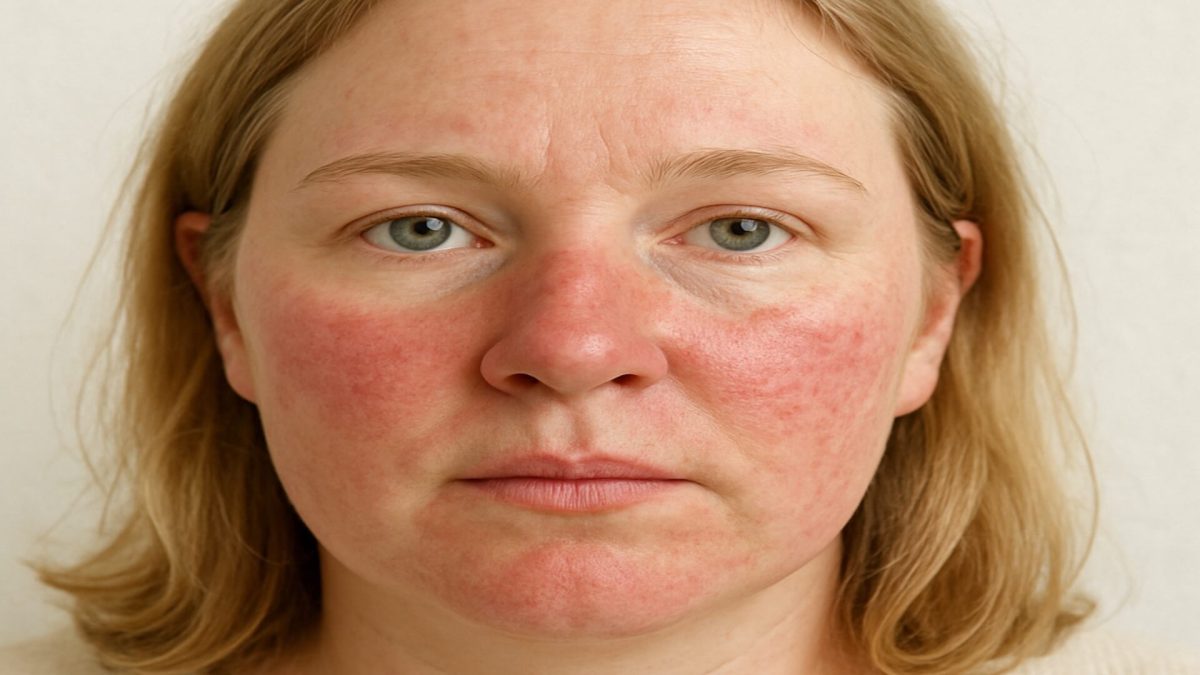
Rosacea is a chronic skin condition that affects facial areas such as the nose and cheeks. It causes redness, visible blood vessels, and acne like bumps that may burn or sting [4].
Rosacea affects about one in twenty people in the UK, especially those with fair skin, and often appears in middle age [1,2]. Sun exposure and genetics are thought to influence symptom patterns [3,5].
Rosacea Features
| Feature | Summary |
|---|---|
| Symptoms | Redness, visible vessels, acne like bumps, and eye irritation [4,5,7] |
| Triggers | Sun, stress, spicy food, alcohol, and temperature shifts [6] |
Table 1: Rosacea features
Rosacea Care
| Care option | Summary |
|---|---|
| Skincare | Gentle products and daily sunscreen for calm, protected skin [7] |
| Medication | Topical or oral treatments to reduce redness and bumps [5] |
Table 2: Rosacea care approaches
Understanding Lupus
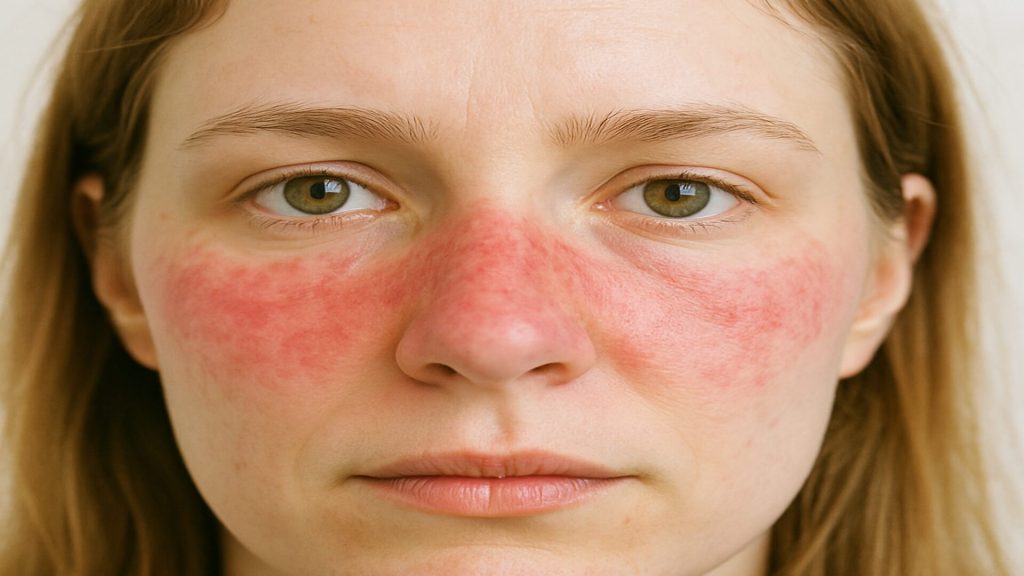
Lupus is an autoimmune disease where the immune system attacks healthy tissues. It affects the skin, joints, and organs, and can resemble rosacea when rashes appear on the face [8].
Up to seventy percent of people with lupus have skin involvement, and symptoms can appear with or without internal issues, which adds complexity to recognition and care [8,9].
Lupus Features
| Feature | Summary |
|---|---|
| Symptoms | Butterfly rashes, scaly patches, photosensitivity, hair loss, and ulcers [8,10] |
| Triggers | Sun, stress, infections, and certain medicines [10,11] |
Table 3: Lupus features
Lupus Care
| Care option | Summary |
|---|---|
| Medication | Anti inflammatory medicines, antimalarials, and immunosuppressants [12] |
| Skincare | Sunscreen and moisturisers to reduce irritation and dryness |
Table 4: Lupus care approaches
Rosacea Vs Lupus Differences
Although both conditions can cause facial redness, their origins and patterns are distinct. Rosacea is a localised skin condition, while lupus is a systemic autoimmune disease with far broader effects [13].
Rosacea produces acne like bumps and visible vessels, while lupus may show butterfly rashes with fatigue or joint pain [13]. These differences guide clearer diagnosis and tailored care.
Key Comparison
| Aspect | Rosacea | Lupus |
|---|---|---|
| Origin | Skin condition only [4] | Autoimmune disease with systemic impact [13] |
| Symptoms | Redness, bumps, visible vessels | Butterfly rash, systemic fatigue [13] |
Table 5: Rosacea vs lupus comparison
Diagnosing Rosacea vs Lupus
Diagnosis begins with clinical assessment. Rosacea is recognised through visible features, while lupus may require blood tests such as ANA or a skin biopsy to confirm involvement [14].
Clear diagnosis supports timely treatment and helps prevent long lasting complications for both conditions.
Managing Life With Rosacea Or Lupus
Rosacea benefits from consistent skincare, sun protection, and trigger awareness. Lupus care involves monitoring symptoms, following treatment plans, and managing stress to support overall wellbeing.
Small routine changes often bring meaningful improvements when applied with consistency and support.
Conclusion
Rosacea and lupus are distinct conditions that affect the body in different ways, and understanding these differences can help support clearer decision making and more confident long term management. Recognising when symptoms relate to the skin or to wider systemic health encourages timely, appropriate care.
If you would like personalised skincare that reflects your own rosacea needs, you can explore a custom formula through Monderma.
Content is for informational purposes only. Monderma treatments are prescribed following consultation. Results and timeframes can vary. Use as directed by your prescriber.
References
- NICE Clinical Knowledge Summaries. Prevalence | Background information | Rosacea.
- BBC News. Rosacea: Your skin does not define you.
- NICE Clinical Knowledge Summaries. Rosacea: Background information.
- Primary Care Dermatology Society. Rosacea.
- NIAMS. Rosacea Symptoms, Causes, & Risk Factors.
- American Academy of Dermatology. Triggers could be causing your rosacea flare ups.
- Bupa UK. Rosacea types, causes, self help, treatment.
- American Academy of Dermatology. Lupus and your skin: Signs and symptoms.
- Cleveland Clinic. Cutaneous Lupus: Symptoms & Treatment.
- NIAMS. Lupus Symptoms, Causes, & Risk Factors.
- WebMD. What Can Cause Lupus & Flare Ups.
- Fanouriakis A, et al. EULAR recommendations for systemic lupus.
- Kirsch Dermatology. Rosacea vs Lupus: What is the Difference.
- NICE. Systemic Lupus Erythematosus | Topic.
Join the Newsletter
Insights that make your skin feel understood
Share this article if you found it helpful



More To Explore
Latest Articles For Your Skin
-
Understanding Pityriasis Rosea: Symptoms & Treatment
-
How To Spot Fake Skincare Products Online
-
CBD Skincare For Calming Redness & Irritation

-
How Fractional Laser Can Renew Damaged Skin
-
Wearable Sensors Used For Skin Condition Tracking

-
Ectoine: Skincare & Eye Care Barrier Protection
-
Baby Acne Myths & Facts Explained

-
Niels Ryberg Finsen: Pioneer Of UV Phototherapy
-
Allantoin Uses & Benefits For Daily Skincare

-
Chapped Lips: Causes & How To Treat Them