 Monderma
- 24 May 2025
- Good posture supports mood
- Upright stance boosts presence
- Alignment reduces daily strain
- Exercise improves body control
- Confidence grows with Monderma
Good posture shapes how confidence appears in daily life and supports ease in movement during everyday tasks. It guides how presence is perceived and maintains steady comfort.
In this article the connection between posture and confidence is explored to show how alignment and simple daily habits strengthen comfort, balance, and the way you feel each day.
Confidence & Posture: A Psychological Link
Posture influences physical comfort and emotional balance [1]. Correct sitting posture and the ability to stand up straight ease strain on muscles and may support long term comfort [2].
Upright posture may improve personal mood. A study in Health Psychology found that participants who sat upright reported higher self esteem and reduced fear compared to slouched posture [3].
Aligning the spine may also reduce cortisol and ease anxiety during daily tasks [4]. These findings show how confidence and posture are linked and how alignment shapes inner balance.
The Benefits Of Exercise For Posture
Exercise strengthens muscles in the back, core, and shoulders to support posture [5]. Yoga and Pilates promote balance and alignment for steadier comfort during daily movement [6].
Incorporating simple exercises into the week can reduce tension and improve body control. A study showed that posture correction exercise reduced musculoskeletal discomfort [6].
| Exercise | Benefit |
|---|---|
| Planks | Builds core strength for spinal support |
| Bridge exercises | Strengthens lower back and glutes |
| Shoulder blade squeezes | Improves shoulder alignment |
| Yoga mountain or tree pose | Enhances overall body alignment |
Table 1: posture exercises and benefits
Proper Sitting Posture: Why It Matters
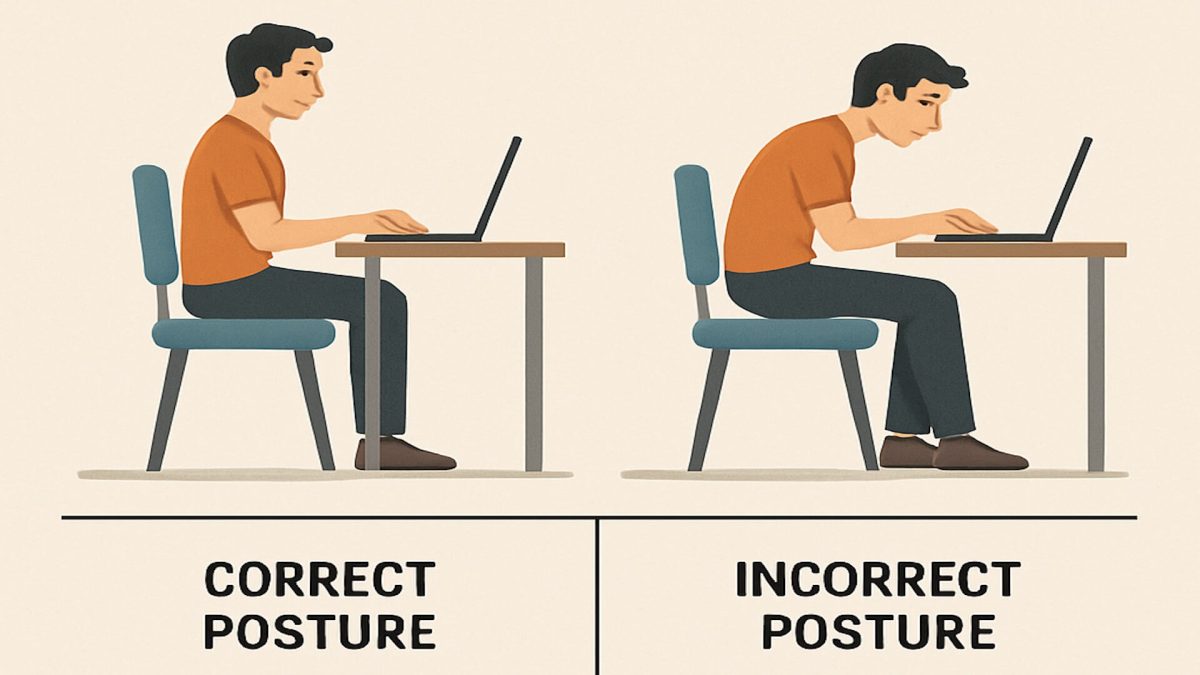
Long hours at a desk may strain the neck and back [2]. Correct sitting posture protects comfort by supporting the spine and easing daily tension as part of stable movement habits.
Simple adjustments can improve comfort during long periods of sitting. Ergonomic support may reduce strain on the spine and promote sustainable alignment over time [2].
| Guideline | Purpose |
|---|---|
| Feet flat on the floor | Provides stability |
| Knees at right angles | Aligns hips and knees |
| Back straight with lumbar support | Supports spine |
| Shoulders relaxed | Prevents hunching |
| Monitor at eye level | Reduces neck strain |
Table 2: sitting posture guidelines
Children’s Posture: Developing Good Habits
Good child’s posture supports healthy growth and long term comfort. Poor posture in childhood may lead to future strain and reduced daily mobility if not supported early [7].
Simple habits such as sitting tall and active play support a healthy pattern for movement. Early training improves spinal alignment and supports confidence in routine tasks [8].
| Tip | Benefit |
|---|---|
| Model good posture | Children mimic adult behaviour |
| Use child sized furniture | Ensures ergonomic fit |
| Encourage active play | Improves balance and coordination |
Table 3: posture habits for children
Benefits Of A Posture Brace
A posture brace may guide shoulder alignment and support early retraining when posture is difficult to maintain [2]. It helps remind the body to stay upright during daily tasks.
Evidence suggests benefit for mild issues, although effects may be limited without strengthening exercises [2]. Braces support alignment best when paired with regular training.
Practical Tips For Everyday Posture Improvement
Daily habits help posture become natural and comfortable. Simple awareness eases unnecessary strain and supports steadier balance in everyday routines for lasting comfort.
Steady movement prevents stiffness and supports posture control. NHS guidance recommends regular activity to reduce tension and maintain natural alignment through the day [9].
| Tip | Benefit |
|---|---|
| Be mindful | Increases awareness of sitting position |
| Take breaks | Prevents stiffness from long periods |
| Use ergonomic furniture | Supports lumbar support and alignment |
| Stay active | Maintains muscle strength and flexibility |
Table 4: daily posture support tips
Conclusion
Posture and confidence work together to support daily comfort. Correct sitting posture and steady alignment reduce strain and improve presence in personal and professional moments.
A balanced routine of exercise and mindful movement builds confidence through comfort. You may explore Monderma’s gentle skincare guidance through a free consultation to enhance overall balance and well being.
Content is for informational purposes only. Monderma treatments are prescribed following consultation. Results and timeframes can vary. Use as directed by your prescriber.
References
- Physiopedia. Posture. Physiopedia.
- Ergonomics. StatPearls. 2025.
- Peper E, Lin IM, Harvey R, Perez J. How posture affects memory recall and mood. Health Psychology. 2017;36(5):415–423.
- Nair S, Sagar M, Sollers J, Consedine N, Broadbent E. Do slumped and upright postures affect stress responses. Journal of Behaviour Therapy and Experimental Psychiatry. 2015;46:153–161.
- Degenerative Disc Disease Treatment for Low Back Pain. Spine Health.
- Park S, Park J. Effect of an exercise program for posture correction on musculoskeletal pain. Journal of Physical Therapy Science. 2014;26(8):1237–1240.
- Back Pain in Children. St George’s University Hospitals NHS Foundation Trust.
- Park MJ, Park JS. Effect of a posture training program on cobb angle and knowledge of posture of elementary school students. Taehan Kanho Hakhoe Chi. 2003;33(5):643–650.
- Sitting exercises. NHS.
Join the Newsletter
Insights that make your skin feel understood
Share this article if you found it helpful



More To Explore
Latest Articles For Your Skin
-
Understanding Pityriasis Rosea: Symptoms & Treatment

-
How To Spot Fake Skincare Products Online

-
CBD Skincare For Calming Redness & Irritation

-
How Fractional Laser Can Renew Damaged Skin
-
Wearable Sensors Used For Skin Condition Tracking

-
Ectoine: Skincare & Eye Care Barrier Protection

-
Baby Acne Myths & Facts Explained

-
Niels Ryberg Finsen: Pioneer Of UV Phototherapy
-
Allantoin Uses & Benefits For Daily Skincare

-
Chapped Lips: Causes & How To Treat Them