 Monderma
- 16 May 2025
- Perioral dermatitis causes facial redness
- It shows bumps and dryness near the mouth
- Triggers include skincare and steroids
- Targeted treatments help calm flares
- Supported by use of Monderma
Perioral dermatitis affects comfort and confidence through redness, bumps, and dryness around the mouth, nose, or eyes. These symptoms can disrupt daily life and may be difficult to distinguish from acne or eczema.
In this article you will find clear guidance that explains symptoms, causes, diagnostic clues, and evidence based treatment options that help manage this condition.
What Is Perioral Dermatitis?
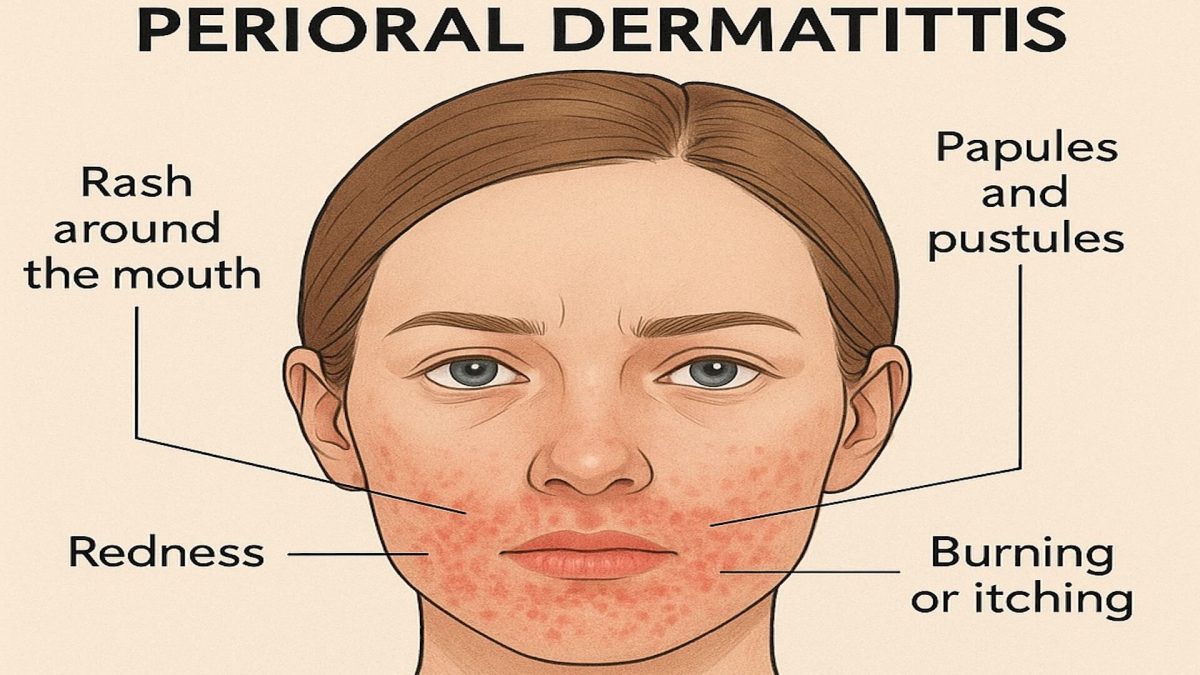
Perioral dermatitis is a facial rash that appears mainly around the mouth but may affect the nose and eyes. It shows small red bumps that can resemble acne or eczema, which may lead to misdiagnosis [1,7].
It rarely includes comedones typical of acne and does not usually show the intense itch seen in eczema [14]. It is more common in women aged 16 to 45 and may persist without tailored care [1,2,3].
Symptoms Of Perioral Dermatitis
Symptoms appear in varying intensity but follow a recognisable pattern that supports diagnosis.
Key Symptoms
| Symptom | Description |
|---|---|
| Redness or rash | Erythematous rash near the mouth, nose, or eyes while sparing the lip border [1] |
| Bumps | Small red papules that may contain clear or pus filled content [2] |
| Burning sensation | Mild to moderate discomfort or burning in affected areas [3] |
| Flakiness or dryness | Scaly or dry skin that may worsen irritation [4] |
Table 1: Typical symptoms of perioral dermatitis
These signs may fluctuate with triggers but rarely affect the lips directly, which helps differentiate it from other facial conditions [1].
Perioral Dermatitis Causes
The exact cause remains unclear, yet several factors may contribute to flare patterns. Identifying these helps reduce recurrence and guide treatment choices.
Common Triggers
| Trigger | Description |
|---|---|
| Topical steroids | Linked with up to 90 percent of cases through prolonged or inappropriate use [3,4] |
| Skincare products | Occlusive products or harsher formulas may aggravate skin [3,6,7] |
| Hormonal changes | Menstruation, pregnancy, or contraceptive use may influence outbreaks [6,7] |
| Environmental factors | Sunlight, weather changes, and stress may provoke symptoms [3,6] |
Table 2: Potential causes linked with perioral dermatitis
Diagnosis
Diagnosis is clinical, guided by symptom pattern and history. Biopsy may be used in rare unclear cases and can show perivascular and perifollicular inflammation, although findings are not specific [8].
Treatments For Perioral Dermatitis
Treatment combines reduced triggers with topical and oral medicines tailored to severity.
Treatment Options
| Treatment | Description |
|---|---|
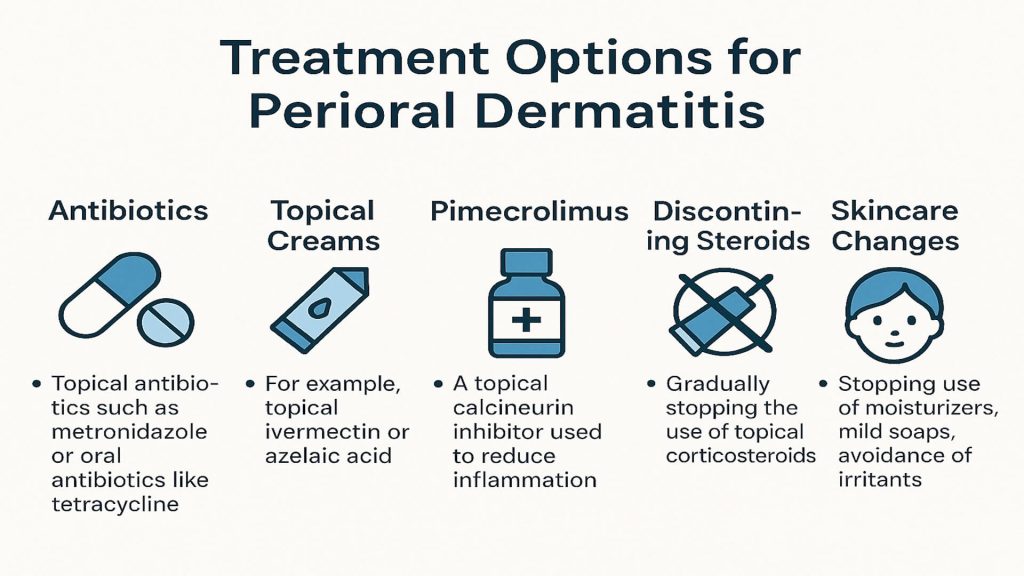
| Metronidazole | Topical antibiotic that reduces inflammation and bacteria [5] |
| Pimecrolimus cream | Non steroid anti inflammatory that calms skin [10,11] |
| Clindamycin | Topical antibiotic that targets bacteria and redness [5] |
| Azelaic acid | Mild anti inflammatory that reduces redness and irritation [9] |
| Oral antibiotics | Options such as doxycycline or tetracycline for persistent cases [12] |
| Gentle skincare and sunscreen | Supports barrier function and reduces triggers [3,6] |
Table 3: Evidence based treatments for perioral dermatitis
Discontinuing Topical Steroids
Stopping topical steroids is essential, yet rebound may occur, so gradual withdrawal helps support comfort [3,13].
Azelaic Acid Support
Azelaic acid offers effective and gentle support, with research noting improvement in many cases within several weeks [9].
Pimecrolimus Cream
Two RCTs support pimecrolimus for steroid induced perioral dermatitis, with evidence showing significant improvement in inflammation [10,11].
Doxycycline
Modified release doxycycline supports persistent cases with fewer gastrointestinal effects than standard formulations [12].
Conclusion
Perioral dermatitis can be managed effectively with gentle routines, awareness of triggers, and treatments that help calm inflammation and restore balance. Understanding how factors such as topical steroid use and skin sensitivity contribute to flare ups supports clearer, steadier progress over time.
If you would like personalised skincare shaped around your own needs, you can explore a custom formula through Monderma.
Content is for informational purposes only. Monderma treatments are prescribed following consultation. Results and timeframes can vary. Use as directed by your prescriber.
References
- Perioral dermatitis – GPnotebook.
- Perioral dermatitis – VALINTERMED.
- Perioral Dermatitis | Doctor. Patient.info.
- Answer: Can you identify this condition.
- Perioral Dermatitis. StatPearls.
- Perioral Dermatitis: Managing the Healing Phases.
- Wikipedia. Perioral dermatitis.
- Biopsies of Facial Dermatoses Made Simple.
- Jansen T, Melnik BC, Schadendorf D, et al. Steroid induced periorificial dermatitis in children.
- Oppel T, Pavicic T, Kamann S, et al. Pimecrolimus cream efficacy in perioral dermatitis.
- Schwarz T, Kreiselmaier I, Bieber T, et al. Pimecrolimus cream in adult perioral dermatitis.
- Del Rosso JQ. Management of papulopustular rosacea and perioral dermatitis.
- Diehl KL, Cohen PR. Topical steroid induced perioral dermatitis.
Join the Newsletter
Insights that make your skin feel understood
Share this article if you found it helpful



More To Explore
Latest Articles For Your Skin
-
Understanding Pityriasis Rosea: Symptoms & Treatment
-
How To Spot Fake Skincare Products Online
-
CBD Skincare For Calming Redness & Irritation

-
How Fractional Laser Can Renew Damaged Skin
-
Wearable Sensors Used For Skin Condition Tracking

-
Ectoine: Skincare & Eye Care Barrier Protection

-
Baby Acne Myths & Facts Explained

-
Niels Ryberg Finsen: Pioneer Of UV Phototherapy
-
Allantoin Uses & Benefits For Daily Skincare

-
Chapped Lips: Causes & How To Treat Them