 Monderma
- 09 Feb 2025
-
Causes redness and acne-like bumps
-
Common in adults with sensitive skin
-
Treatable with topical and oral medicines
-
Azelaic acid and ivermectin are key options
-
Stress and diet management can reduce flares
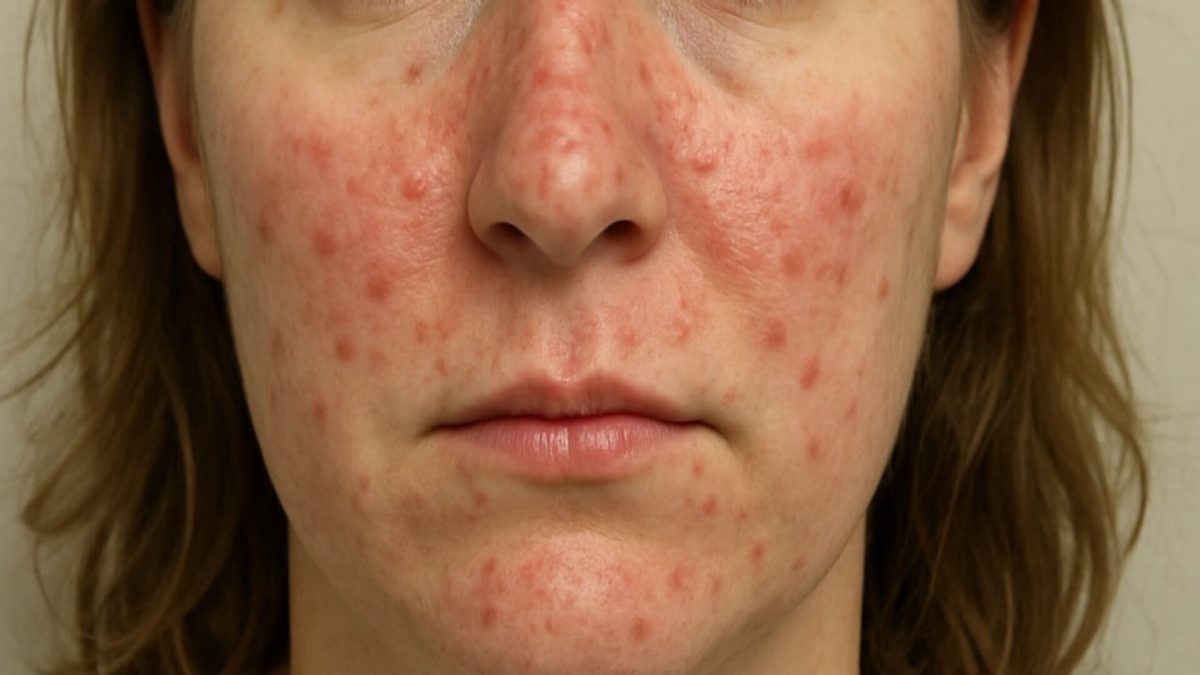
Papulopustular rosacea is a common subtype of rosacea that causes facial redness, inflammation, and acne-like bumps. Understanding its symptoms and treatment options helps manage this chronic condition effectively and improve skin comfort.
This article explains what papulopustular rosacea is, its main symptoms, and the most effective evidence-based treatments, alongside lifestyle and skincare advice.
What Is Papulopustular Rosacea
Papulopustular rosacea is a chronic inflammatory skin condition often mistaken for acne. It presents as red bumps and pus-filled lesions on the face, commonly affecting the cheeks, chin, nose, and forehead [6].
This subtype can occur in all skin tones and genders but is more frequent in adults with lighter complexions [5]. Along with erythematotelangiectatic, phymatous, and ocular rosacea, it is one of four recognised forms of rosacea.
Persistent redness, visible capillaries, and a burning or stinging sensation are hallmark features. Many individuals also experience emotional distress due to changes in appearance [1].
Symptoms Of Papulopustular Rosacea
Recognising symptoms early supports accurate diagnosis and appropriate care.
| Symptom | Description |
|---|---|
| Persistent facial redness | Continuous redness, appearing pink or flushed in lighter skin and dusky brown in darker skin tones [5]. |
| Red bumps (papules) | Small, raised, inflamed spots that may feel tender [6]. |
| Pus-filled bumps (pustules) | White or yellow lesions resembling acne [6]. |
| Visible blood vessels (telangiectasias) | Small red lines caused by dilated capillaries [6]. |
| Burning or stinging sensations | Skin discomfort often described as heat or irritation [1]. |
| Dry, rough texture | The skin may feel tight or scaly [1]. |
Table 1: Common symptoms of papulopustular rosacea and their characteristics.
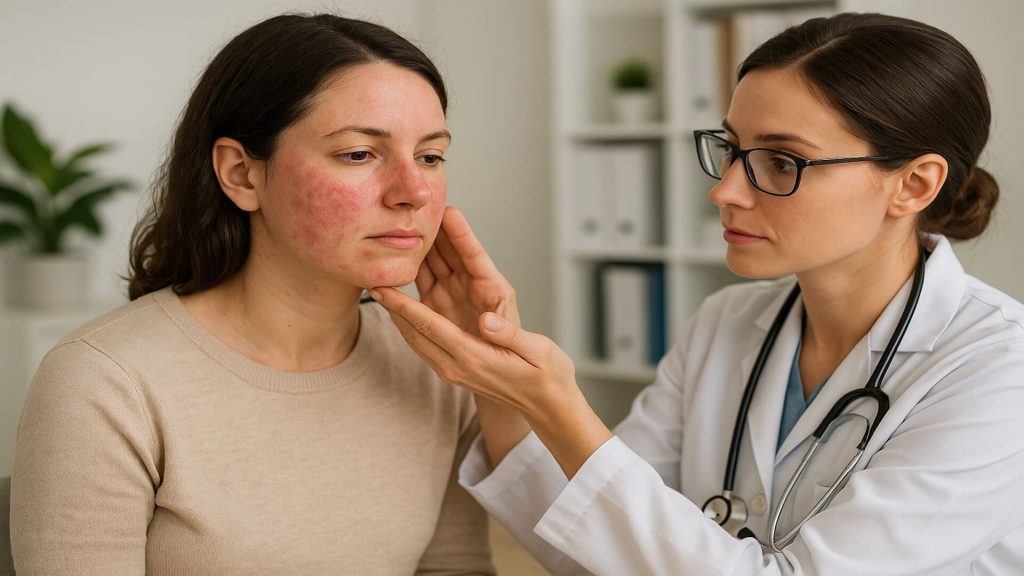
If these symptoms appear, it is important to consult a dermatologist. Rosacea can mimic acne, dermatitis, or perioral inflammation, making professional evaluation essential.
The Best Treatments For Papulopustular Rosacea
Rosacea management requires a combination of topical therapy, oral medication, and supportive skincare. Treatment choice depends on severity, triggers, and response over time.
Topical Treatments
Topical therapies are the first step in controlling inflammation and redness.
- Metronidazole Cream: This antibiotic reduces inflammation and is effective in decreasing papules and pustules. A Cochrane review confirmed its superiority to placebo [2].
- Azelaic Acid: Proven to reduce swelling, redness, and lesions, supported by high-certainty evidence for rosacea [3,12].
- Ivermectin Cream: Acts on inflammation and Demodex mites. Studies show greater lesion reduction and patient satisfaction compared with metronidazole [7,8].
- Tretinoin: A vitamin A derivative that promotes skin renewal. It may help improve texture but requires caution due to possible irritation [2].
Oral Medications
Oral therapy is often recommended for moderate or severe rosacea.
- Antibiotics: Low-dose doxycycline reduces inflammation and lesion count. NICE guidelines recommend tetracyclines, including doxycycline, as first-line systemic therapy [4].
- Isotretinoin: Considered for resistant cases under specialist supervision. It decreases oil production and inflammation but requires careful monitoring due to potential side effects [9].
Laser & Light Therapies
Laser and light-based procedures target persistent redness and visible blood vessels.
- Intense Pulsed Light (IPL): Helps reduce redness and improve skin texture by targeting vascular structures [10,11].
- Pulsed Dye Laser: Effective for telangiectasias and chronic redness but not for papules or pustules. Availability and cost may vary [10].
| Treatment Type | Benefit | Timeframe | Consideration |
|---|---|---|---|
| Topical Azelaic Acid | Reduces redness and swelling | 8–12 weeks | Mild tingling may occur |
| Ivermectin Cream | Reduces inflammation and mites | 12–16 weeks | Excellent tolerability |
| Doxycycline (oral) | Controls moderate to severe lesions | 8–16 weeks | Prescription required |
| IPL Therapy | Improves redness and tone | 4–8 sessions | Private treatment |
| Isotretinoin | For resistant cases | Variable | Requires medical supervision |
Table 2: Common rosacea treatments and their main benefits
Lifestyle Changes & Rosacea Management
Simple adjustments in daily habits can complement clinical treatment and reduce flare frequency.
Diet & Nutrition
A balanced, anti-inflammatory diet may improve skin comfort. Include foods rich in omega-3 fatty acids, antioxidants, and vitamins. Limiting alcohol, spicy foods, and very hot drinks may reduce flare-ups [6].
Stress & Emotional Balance
Stress is a well-known trigger. Relaxation techniques such as meditation, yoga, or breathing exercises can help stabilise flare cycles [6].
Skin Hydration
Hydration supports the skin barrier, improving tolerance to topical treatments. Drink adequate water and use moisturisers with ceramides or hyaluronic acid [6].
Monderma’s Personalised Approach To Rosacea
Monderma provides personalised, prescription-strength formulations created by UK-registered prescribers and dispensed by a GPhC-registered pharmacy.
Each rosacea treatment is tailored following an online clinical consultation. Ingredients such as azelaic acid and ivermectin help reduce redness, inflammation, and flare frequency.
| Ingredient | Strength | Description | Role In Rosacea Management |
|---|---|---|---|
| Azelaic Acid | 10–20% | Naturally derived anti-inflammatory | Reduces swelling and redness |
| Ivermectin | 1% | Antiparasitic and anti-inflammatory | Targets Demodex and reduces lesions |
| Niacinamide | 2–4% | Vitamin B3 derivative | Strengthens barrier and calms irritation |
| Tretinoin | 0.01–0.05% | Vitamin A retinoid | Supports texture and cell renewal |
Table 3: Key ingredients in Monderma’s prescription rosacea treatments
Conclusion
Papulopustular rosacea is a treatable skin condition that benefits from consistent care, prescription-based treatment, and targeted skincare. Combining topical therapy, oral medication, and lifestyle changes helps restore comfort and confidence.
Professional assessment remains essential for accurate diagnosis and safe treatment selection. Monderma’s tailored prescription skincare offers expert-guided solutions for managing rosacea symptoms effectively and maintaining long-term skin balance.
Content is for informational purposes only. Monderma treatments are prescribed following consultation. Results and timeframes can vary. Use as directed by your prescriber.
Bibliography
- McGregor S.P., Alinia H., Snyder A., Tuchayi S.M., Fleischer A., Feldman S.R. A Review of the Current Modalities for the Treatment of Papulopustular Rosacea. Dermatol Clin. 2018;36(2):135–150.
- van Zuuren E.J., Fedorowicz Z., Carter B., van der Linden M.M., Charland L. Interventions for Rosacea. Cochrane Database Syst Rev. 2015;2015(4):CD003262.
- van Zuuren E.J., Fedorowicz Z., Tan J., et al. Interventions for Rosacea Based on the Phenotype Approach: An Updated Systematic Review. Br J Dermatol. 2019;181(1):65–79.
- National Institute for Health and Care Excellence (NICE). Rosacea – Management. Updated October 2021.
- American Academy of Dermatology. Rosacea: Signs and Symptoms.
- Healthline. Papulopustular Rosacea: Symptoms, Triggers, Treatment.
- Healthline. What to Know About Ivermectin for Rosacea: Effectiveness, Side Effects, and Safety.
- AAFP. Ivermectin 1% Cream (Soolantra) for Inflammatory Lesions of Rosacea.
- Assiri A. et al. Efficacy of Low-Dose Isotretinoin in the Treatment of Rosacea.
- Schroeter C.A., Haaf-von Below S., Neumann H.A. Effective Treatment of Rosacea Using Intense Pulsed Light Systems. Dermatol Surg. 2005;31(10):1285–1289.
- King S. et al. A Systematic Review to Evaluate the Efficacy of Azelaic Acid in the Management of Acne, Rosacea, Melasma and Skin Aging. PubMed.
- Mazurek K. et al. Dermocosmetics Containing Azelaic Acid for Rosacea Management. J Cosmet Dermatol. 2016;15(4):393–399.
Join The Newsletter
Skin insights, delivered to you
Share this article if you found it helpful



More To Explore
Latest Articles For Your Skin
-
Understanding Pityriasis Rosea: Symptoms & Treatment
-
How To Spot Fake Skincare Products Online
-
CBD Skincare For Calming Redness & Irritation
-
How Fractional Laser Can Renew Damaged Skin
-
Wearable Sensors Used For Skin Condition Tracking

-
Ectoine: Skincare & Eye Care Barrier Protection
-
Baby Acne Myths & Facts Explained

-
Niels Ryberg Finsen: Pioneer Of UV Phototherapy
-
Allantoin Uses & Benefits For Daily Skincare
-
Chapped Lips: Causes & How To Treat Them