 Monderma
- 11 May 2025
- Natural resin with proven skin effects
- Supports healing in stressed skin
- Calms redness through gentle action
- Helps minor concerns safely
- Guide skincare choices with Monderma
Propolis is a natural resin made by bees that supports calm skin through soothing activity and protective effects. Its long use brings reassurance for those seeking gentle care.
In this article you will find clear guidance that explains how propolis works, how it benefits sensitive skin, and how it can be used safely within daily routines.
What Propolis Contains
Propolis forms from resins, waxes, essential oils, pollen, and phenolic compounds that support antimicrobial and antioxidant action [1,3]. This blend helps maintain comfort on sensitive skin.
Its composition varies by region since bees gather different plant materials, which changes the balance of protective compounds in each batch [1,3].

Historical Use
Historical texts describe its role in supporting wound healing and easing irritation. Greek and Roman records note its use for calming discomfort during recovery [1].
Its long standing use continues to support interest in natural ingredients that protect skin and maintain surface balance [1].
Key Propolis Benefits
The propolis benefits for skin are wide ranging and supported by research.
Antimicrobial Effects
It contains active compounds that help manage bacteria linked with common skin concerns, offering gentle support without harsh effects [2].
Anti Inflammatory Action
Studies show it can ease redness and swelling in irritated areas, helping restore comfort during flare ups [3,4].
Antioxidant Support
Its antioxidant activity helps neutralise free radicals and supports resilience during daily environmental exposure [1,3].
Healing & Repair
Evidence suggests it may support wound healing and reduce visible scarring by maintaining a calmer environment around damaged areas [4].

Hydration & Comfort
Propolis can help skin retain moisture, easing tightness and supporting comfort on sensitive or reactive skin [1,3].
Minor Skin Concerns
It may help manage minor infections due to antibacterial and antifungal properties observed in research [1,2].
Propolis In Formulations
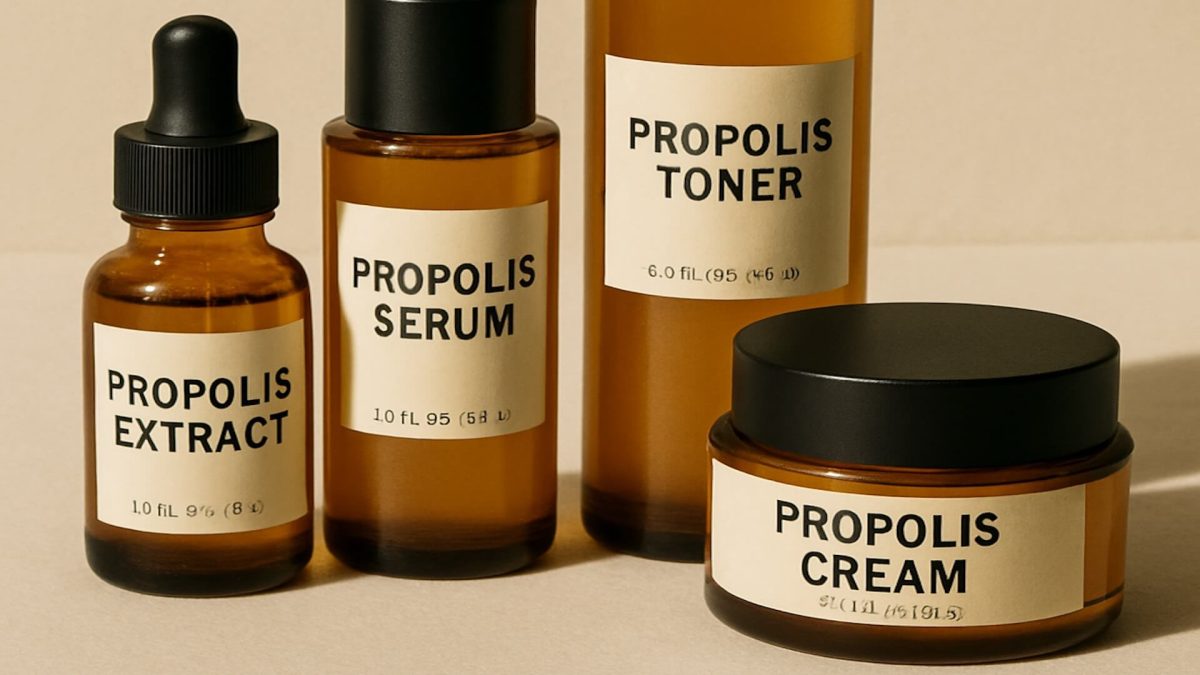
Manufacturers include propolis in creams, serums, masks, and cleansers to support hydration and surface comfort [1,3].
Its versatility allows pairing with ingredients that strengthen balance and soothe the skin barrier.
Propolis Product Types
| Product Type | Description |
|---|---|
| Serums | Targeted formulas that support surface recovery |
| Creams and balms | Hydrating formulas that protect and condition skin |
| Masks | Treatments that provide extended soothing contact |
| Cleansers | Gentle cleansers that maintain essential moisture |
Table 1: Common product types with propolis
How To Use Propolis
Patch testing is recommended since sensitivities can occur. A small area on the inner arm can be tested before adding it to a routine.
Layering serums after cleansing and before moisturising supports absorption. Spot use can help areas that need calming.
Night use may support natural repair, and pairing it with niacinamide or hyaluronic acid can enhance hydration.
Safety & Reactions
Allergic contact dermatitis has been recorded, especially in those with frequent exposure. Patch testing is advised before long term use [5].
Propolis & Sustainability
Sustainable beekeeping protects ecosystems and supports access to high quality propolis. Ethical harvesting ensures long term supply [1,3].
Selecting brands with transparent sourcing helps maintain environmental balance and product quality.
Conclusion
Propolis offers antimicrobial, anti inflammatory, antioxidant, and soothing properties that can support skin balance and comfort. Its long history in topical care makes it a useful addition for those seeking gentle, naturally supportive ingredients.
If you would like skincare tailored to your own needs, you can explore a personalised formula through Monderma.
Content is for informational purposes only. Monderma treatments are prescribed following consultation. Results and timeframes can vary. Use as directed by your prescriber.
References
- Pasupuleti VR, Sammugam L, Ramesh N, Gan SH. Honey, propolis, and royal jelly: a comprehensive review of their biological actions and health benefits.
- Almuhayawi MS. Propolis as a novel antibacterial agent.
- Cornara L, Biagi M, Xiao J, Burlando B. Therapeutic Properties of Bioactive Compounds from Different Honeybee Products.
- Oryan A, Alemzadeh E, Moshiri A. Potential role of propolis in wound healing: biological properties and therapeutic activities.
- Hausen BM. Evaluation of the main contact allergens in propolis.
Join the Newsletter
Insights that make your skin feel understood
Share this article if you found it helpful



More To Explore
Latest Articles For Your Skin
-
Understanding Pityriasis Rosea: Symptoms & Treatment
-
How To Spot Fake Skincare Products Online
-
CBD Skincare For Calming Redness & Irritation
-
How Fractional Laser Can Renew Damaged Skin
-
Wearable Sensors Used For Skin Condition Tracking

-
Ectoine: Skincare & Eye Care Barrier Protection

-
Baby Acne Myths & Facts Explained

-
Niels Ryberg Finsen: Pioneer Of UV Phototherapy
-
Allantoin Uses & Benefits For Daily Skincare
-
Chapped Lips: Causes & How To Treat Them