 Monderma
- 05 Mar 2025
- Moles form from pigment cells
- Warts spread through viral contact
- Skin tags rise from friction
- Each growth behaves differently
- Understanding supports choices with Monderma
Skin growths such as warts and moles and skin tags can look similar at first, which creates uncertainty for many readers noticing new marks on their skin. These benign lesions of the skin often affect comfort or confidence.
In this article, we explain what each growth is, why it forms, and how to recognise key differences. You will see simple ways to compare appearance, cause, and care so decisions feel clearer.
What Are Warts?
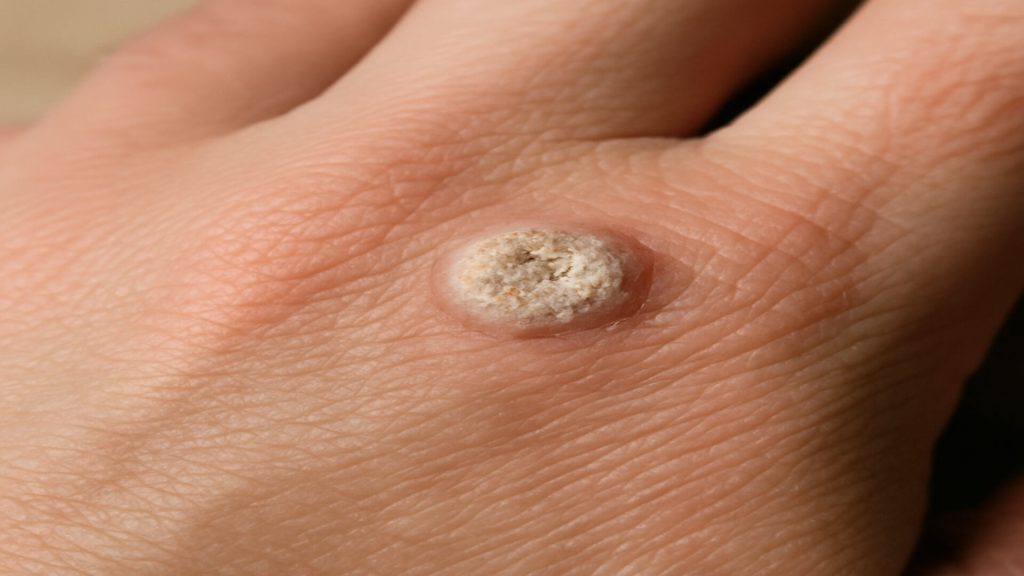
Warts are benign lesions of the skin caused by human papillomavirus, which spreads through direct contact or shared surfaces [3,4]. Their rough surface helps distinguish them from smoother moles.
Warts may display tiny black dots from clotted vessels. They appear most often on hands, feet, fingers, and other areas exposed to friction or moisture.
Wart Features
| Feature | Summary |
|---|---|
| Colour | Skin coloured or white with rough texture |
| Shape and size | Small, raised, irregular, with a grainy surface |
| Texture | Black dots may be present within the growth |
| Location | Hands, fingers, feet, knees, and other contact points |
Table 2: Features of warts
Although harmless, warts can cause discomfort on weight bearing skin. Around ten percent of people may have warts at any time, especially children and young adults [4].
What Are Moles?
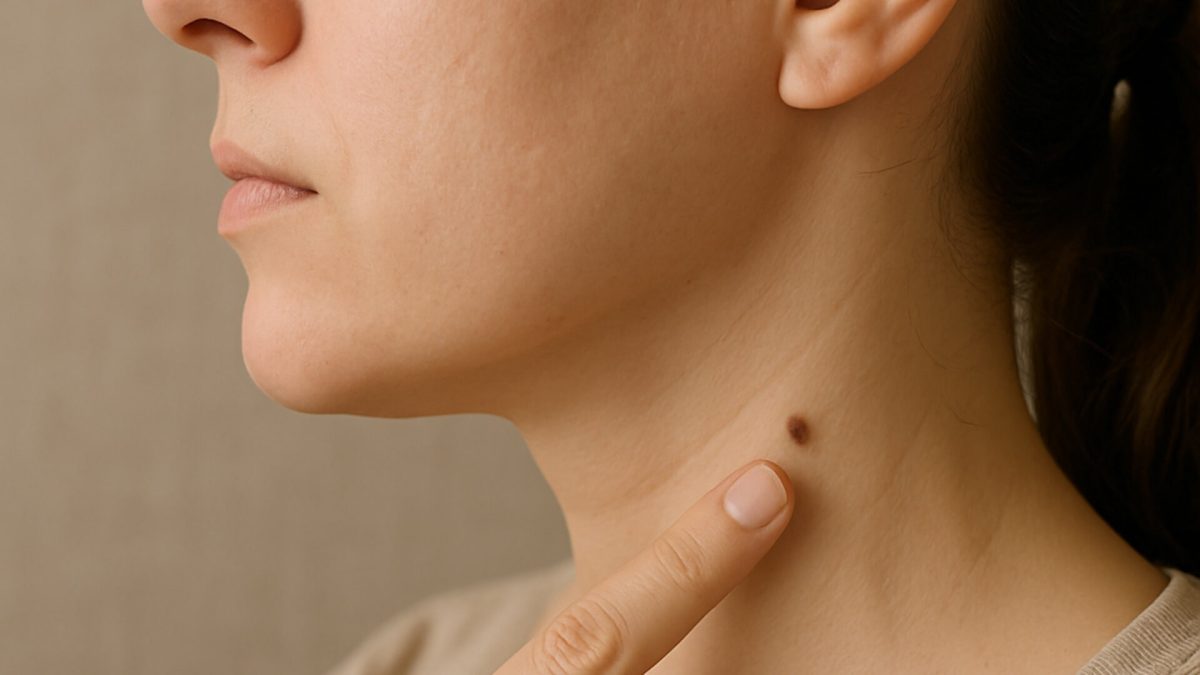
Moles are benign lesions of the skin formed when melanocytes cluster instead of spreading evenly, creating brown or black areas with varied shapes and textures [1]. Some atypical moles may carry melanoma risk [2].
Moles can be flat or raised. They may sit alone or in groups and often remain unchanged for years. Colour may vary from light brown to almost black depending on pigment [1].
Mole Features
| Feature | Summary |
|---|---|
| Colour | Brown, black, or occasionally skin coloured or bluish |
| Shape and size | Often round or oval, usually under six millimetres |
| Texture | Flat or raised with smooth or slightly uneven surfaces |
| Location | Can appear anywhere on the skin surface |
Table 1: Features of moles
Most moles stay harmless. People with more than fifty moles or several atypical moles have higher melanoma likelihood, so steady monitoring helps early recognition [2].
What Are Skin Tags?
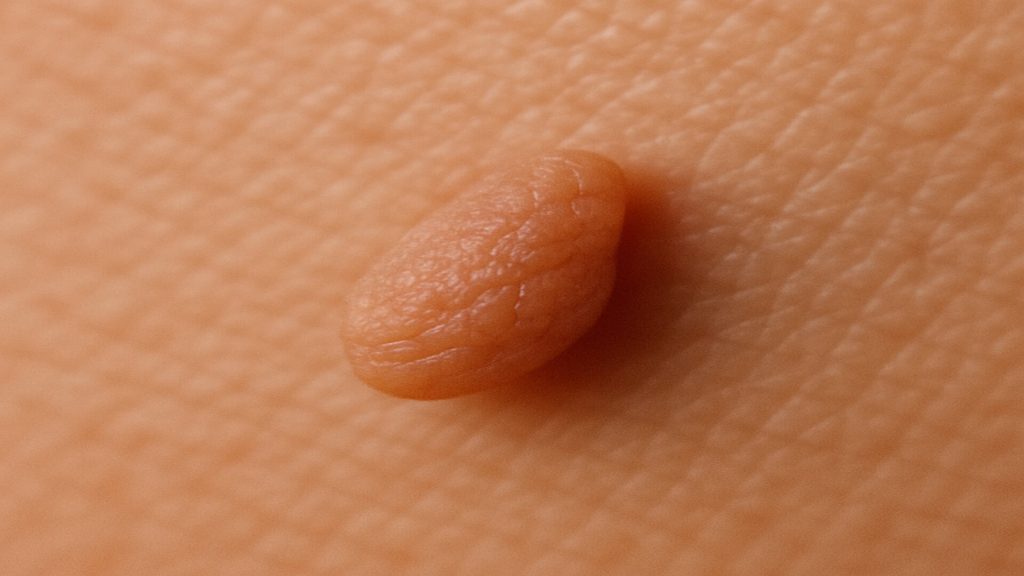
Skin tags are soft benign growths that rise where skin rubs on itself. Their flexible, smooth structure helps distinguish them from warts or the firmer outline of moles.
They appear in folds such as the neck, armpits, groin, and under the breasts. They may increase slowly over time in areas with repeated friction [6].
Skin Tag Features
| Feature | Summary |
|---|---|
| Colour | Usually skin coloured |
| Shape and size | Small, protruding, often elongated |
| Texture | Soft and smooth |
| Location | Neck, armpits, groin, and other folds |
Table 3: Features of skin tags
Key Differences
Many assume all benign lesions of the skin behave in similar ways, which leads to misunderstandings. Atypical moles may develop into melanoma [2], while warts spread through viral contact [3]. Skin tags do not spread and carry no cancer risk.
Comparison Of Growth Types
| Moles | Warts | Skin tags |
|---|---|---|
| Smooth or slightly raised, brown or black [1] | Rough, grainy, may show black dots [3] | Soft, protruding, skin coloured [6] |
| Melanocyte clustering, not infectious [1] | Human papillomavirus infection [3] | Removal if irritated or cosmetic |
Table 4: Comparison of moles, warts, and skin tags
Cause
Moles form from melanocyte clustering [1]. Warts arise from viral contact [3]. Skin tags come from friction in folds [6].
Risk & Contagion
Moles rarely progress to melanoma and do not spread [2]. Warts spread easily but stay benign [4]. Skin tags do not spread.
Treatment
Moles need no treatment unless changing. Warts may need salicylic acid or liquid nitrogen, with cryotherapy reaching about seventy percent resolution [5]. Skin tags can be removed for comfort.
Risk Factors & Removal
Sun exposure increases melanoma likelihood in atypical moles [2]. Warts spread more in warm and moist environments [4]. Skin tags form where friction persists [6].
Liquid nitrogen supports wart removal. Surgical care may be used for suspicious moles or bothersome skin tags [5,6]. Dermatology review ensures correct technique and safety.
When To Seek Dermatology Advice
Seek assessment if a mole changes size, colour, or shape, as these may signal melanoma [2]. Persistent or painful warts may need care such as liquid nitrogen [5]. Any lesion that bleeds, irritates, or inflames should be reviewed promptly.
Conclusion
The difference between warts, moles, and skin tags lies in their appearance, causes, and management needs. While most are harmless, monitoring for changes and understanding their patterns can help support calm, confident skin care decisions.
If you would like personalised skincare for your own concerns, you can explore a tailored formula through Monderma.
Content is for informational purposes only. Monderma treatments are prescribed following consultation. Results and timeframes can vary. Use as directed by your prescriber.
References
- StatPearls. Congenital Nevus.
- NHS. Moles and Skin Cancer.
- NHS. Warts and Verrucas.
- NICE. Clinical Knowledge Summary: Warts and Verrucae.
- StatPearls. Skin Tags.
Join the Newsletter
Insights that make your skin feel understood
Share this article if you found it helpful



More To Explore
Latest Articles For Your Skin
-
Understanding Pityriasis Rosea: Symptoms & Treatment
-
How To Spot Fake Skincare Products Online

-
CBD Skincare For Calming Redness & Irritation

-
How Fractional Laser Can Renew Damaged Skin
-
Wearable Sensors Used For Skin Condition Tracking

-
Ectoine: Skincare & Eye Care Barrier Protection

-
Baby Acne Myths & Facts Explained

-
Niels Ryberg Finsen: Pioneer Of UV Phototherapy
-
Allantoin Uses & Benefits For Daily Skincare

-
Chapped Lips: Causes & How To Treat Them