 Monderma
- 29 Jan 2025
- Tazarotene treats psoriasis, acne, and photoageing effectively
- It normalises cell turnover and reduces inflammation
- More potent than tretinoin but can cause irritation
- Use gently with moisturiser and daily sunscreen
- Avoid in pregnancy and harsh skincare combinations
Tazarotene is a potent topical retinoid, effective for psoriasis but currently unavailable in the UK. It normalises skin cell turnover and reduces inflammation for acne and photoageing. Tazarotene may cause more irritation than tretinoin but can offer stronger results.
In this guide, we outline proper use, including gentle cleansing, moisturising, sun protection, and gradual application, as well as important precautions such as avoiding use during pregnancy and not combining it with harsh skincare products.
Understanding Tazarotene
Tazarotene is a synthetic vitamin A derivative used to treat psoriasis, acne, and signs of photoageing. Available in cream, gel, and foam formulations, it works by regulating cell turnover and inflammation. Although it was once licensed in the UK for mild to moderate plaque psoriasis, it is not currently available [1].
By influencing gene expression and skin renewal, tazarotene helps reduce abnormal skin growth and inflammation, improving both appearance and comfort for those with chronic dermatological conditions.
Mechanism Of Action
Tazarotene binds to retinoic acid receptors (RARs), regulating genes that control cell proliferation, differentiation, and inflammation. This process helps normalise skin turnover, making it valuable for conditions like psoriasis and acne [2,3].
| Aspect | Details |
|---|---|
| Target Receptors | Retinoic acid receptors (RAR-β, RAR-γ) |
| Primary Actions | Modulates cell growth, reduces inflammation |
| Effect on Skin Cells | Normalises keratinocyte proliferation |
| Anti-Inflammatory Role | May reduce cytokines such as IL-6 |
| Clinical Relevance | Improves skin texture, reduces plaques and comedones |
Table 1: Mechanism of action and clinical relevance of tazarotene
Clinical Applications
Psoriasis
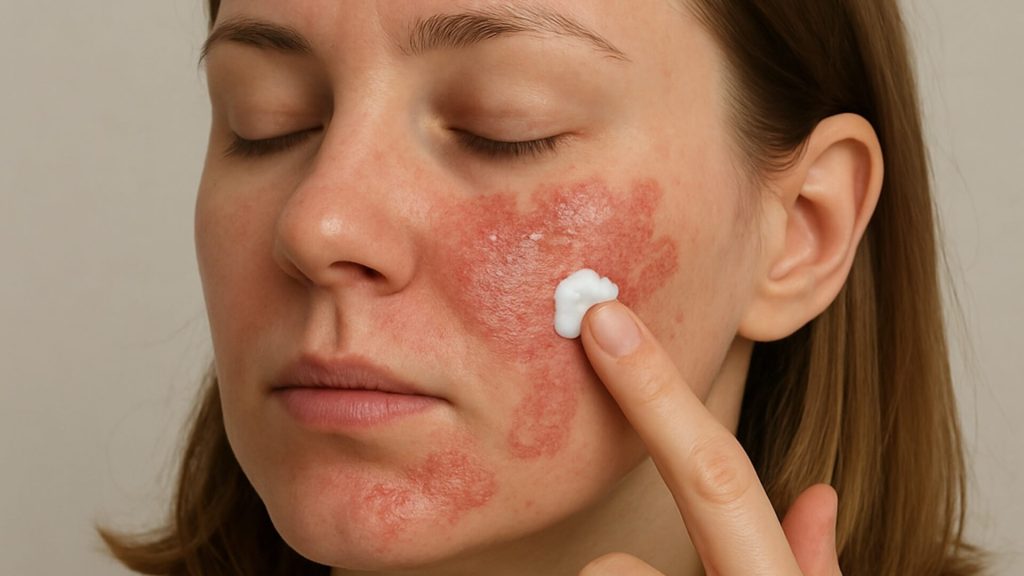
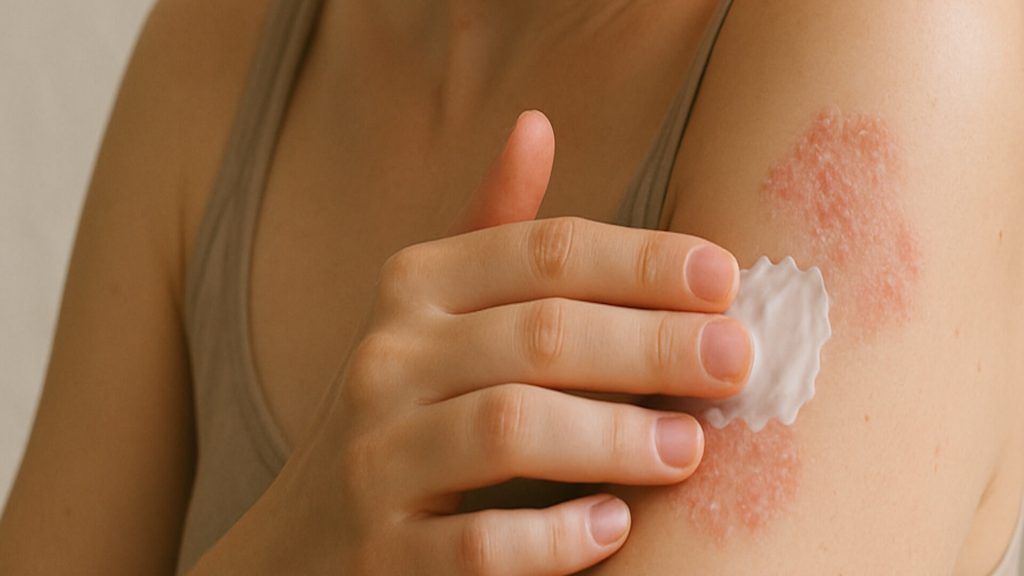
Tazarotene helps thin plaques, reduce redness, and normalise cell growth. Clinical studies show 0.05%–0.1% gels improve mild to moderate plaque psoriasis [4].
It may irritate surrounding skin, so careful application and moisturisation are essential [2].
Acne Vulgaris
Though not licensed in the UK for acne, tazarotene shows strong efficacy internationally. It reduces comedones and inflammation while helping prevent new breakouts [5,6].
Photoageing
Tazarotene stimulates collagen and smooths photoaged skin. Studies show 0.1% cream performs comparably or better than tretinoin 0.05% in reducing pigmentation and fine lines [7].
| Indication | UK Licence Status | Mechanism/Effect | Evidence/Benefit |
|---|---|---|---|
| Psoriasis | Previously licensed, now unavailable | Regulates skin cell growth | Reduces plaques and scaling |
| Acne | Not licensed in UK | Normalises cell turnover | Effective for comedones and inflammation |
| Photoageing | Not licensed | Stimulates collagen | Smooths texture and reduces wrinkles |
Table 2: Indications, mechanisms, and benefits of tazarotene
Tazarotene Vs. Tretinoin
| Feature | Tazarotene | Tretinoin |
|---|---|---|
| Retinoid Generation | Third | First |
| Potency | Generally higher | Moderate |
| Receptor Selectivity | Targets RAR-β, RAR-γ | Less selective |
| Efficacy for Acne | High, per clinical trials | Established |
| Irritation Potential | Higher | Moderate |
| Photoageing Use | Effective | Effective |
| Benzoyl Peroxide Stability | Stable | Inactivated (unless microsphere) |
| Pregnancy Contraindication | Yes | Yes |
| UK Licence | Previously for psoriasis | For acne |
Table 3: Comparison of tazarotene and tretinoin characteristics
Usage Guidelines For Tazarotene
Application Steps
- Cleanse with a mild, non-irritating cleanser.
- Dry skin completely before applying a thin layer of tazarotene.
- Moisturise with a non-comedogenic product to minimise dryness.
- Use SPF 30+ daily to protect against sun sensitivity.
| Step | Guidance |
|---|---|
| Cleansing | Use gentle cleanser; avoid scrubbing |
| Application | Thin layer only on affected skin |
| Moisturisation | Apply after treatment to maintain barrier |
| Sun Protection | Broad-spectrum SPF during daytime |
| Starting Frequency | Alternate nights for 2–3 weeks |
| Increased Use | Nightly once tolerated |
| Expected Results | Around 12 weeks |
Table 4: Recommended usage steps and precautions for tazarotene
Considerations & Precautions
| Factor | Recommendation |
|---|---|
| Pregnancy | Contraindicated; use effective contraception |
| Lactation | Consult healthcare provider before use |
| Other Topicals | Avoid exfoliants, acids, or strong astringents |
| Benzoyl Peroxide | Safe to combine (unlike tretinoin) |
| Skin Irritation | Manage with moisturiser and reduced frequency |
| Photosensitivity | Always use SPF 30+ |
Table 5: Key considerations and safety precautions for tazarotene use
Research & Future Developments
Emerging studies are exploring tazarotene for keratosis pilaris, actinic keratosis, and even certain skin cancers. Formulation advances, such as microsphere gels and foam vehicles, aim to improve tolerability and reduce irritation while maintaining its efficacy [9,10].
Monderma’s Role In Personalised Skincare
Monderma offers bespoke prescription skincare for acne, ageing, and pigmentation. Active ingredients may include:
- Tretinoin for collagen support and anti-ageing
- Adapalene for acne management
- Azelaic acid and hydroquinone for pigmentation
- Ivermectin for rosacea management
While tazarotene is not currently available in the UK, Monderma intends to offer it as soon as it becomes licensed again. For now, equivalent prescription retinoids like tretinoin are formulated through Monderma’s free consultation service, ensuring safe, evidence-based care tailored to each individual’s skin.
Conclusion
Tazarotene is a potent third-generation retinoid that normalises cell turnover, reduces inflammation, and supports collagen production. Though more irritating than tretinoin, it can be more effective for conditions like psoriasis, acne, and photoageing.
Currently unavailable in the UK, its proven mechanism and versatility make it a vital option once reintroduced. Until then, alternatives such as tretinoin and adapalene offer accessible and effective solutions. To discover a personalised skincare plan, including prescription retinoids suited to your skin, complete your free online consultation.
Content is for informational purposes only. Monderma treatments are prescribed following consultation. Results and timeframes can vary. Use as directed by your prescriber.
Bibliography
- Patient.info. Tazarotene for Psoriasis.
- NHS Barnsley CCG. Psoriasis Patient Information Sheet. 2018.
- Cosmoderma. Exploring Tazarotene’s Role in Dermatology.
- Krueger GG, Stingl G, Koo J, et al. Safety and Efficacy of Tazarotene Gel. Arch Dermatol. 1998;134(1):57–60.
- NICE CKS. Acne Vulgaris – Topical Retinoids.
- Medical News Today. Tazarotene Topical Cream: Uses and Side Effects.
- Lowe N, Gormley D, Stoll S, et al. Tazarotene vs Tretinoin in Photodamaged Skin. J Am Acad Dermatol. 2004;50(6):882–890.
- Leyden JJ, Tanghetti EA, Miller B, et al. Tazarotene 0.1% vs Tretinoin 0.1% Gel for Acne. Cutis. 2002;69(2 Suppl):12–19.
- WebMD. Tazarotene (Tazorac, Arazlo) – Uses & Side Effects.
- Psoriasis Association. Tazarotene (Zorac).
- Drugs.com. Is Tazarotene Better Than Tretinoin?
Join The Newsletter
Skin insights, delivered to you
Share this article if you found it helpful



More To Explore
Latest Articles For Your Skin
-
Understanding Pityriasis Rosea: Symptoms & Treatment
-
How To Spot Fake Skincare Products Online
-
CBD Skincare For Calming Redness & Irritation

-
How Fractional Laser Can Renew Damaged Skin
-
Wearable Sensors Used For Skin Condition Tracking

-
Ectoine: Skincare & Eye Care Barrier Protection
-
Baby Acne Myths & Facts Explained

-
Niels Ryberg Finsen: Pioneer Of UV Phototherapy
-
Allantoin Uses & Benefits For Daily Skincare
-
Chapped Lips: Causes & How To Treat Them