 Monderma
- 26 Jan 2025
- Niacinamide tackles redness & uneven tone safely
- It reduces fine lines by 21% in 12 weeks
- Improves UV protection & pigmentation in 8 weeks
- Boosts hydration & strengthens skin barrier
- Safe at 2–5% with visible glow in 4–12 weeks
Niacinamide, a form of vitamin B3, has become a cornerstone ingredient in modern skincare. With strong clinical backing, it benefits all skin types by soothing irritation, reducing hyperpigmentation, and strengthening the skin barrier.
This article explores how niacinamide works, its proven benefits, and how to incorporate it into your daily skincare routine effectively.
What Is Niacinamide?
Niacinamide, also called nicotinamide, is a vitamin B3 derivative essential for maintaining healthy skin and cellular energy. Found in serums, moisturisers, and prescription formulas, it offers a range of benefits supported by scientific evidence [1].
Healthcare professionals recommend niacinamide for various skin concerns, including redness, sensitivity, and pigmentation, because it is effective yet gentle enough for consistent use.
Understanding Vitamin B3
Vitamin B3 supports vital skin processes by fueling nicotinamide adenine dinucleotide (NAD⁺), a molecule crucial for DNA repair and cellular regeneration [2]. Topically, niacinamide enhances repair mechanisms, boosting overall skin resilience and texture.
How Niacinamide Penetrates Skin
Niacinamide’s water-soluble structure allows deep penetration into the skin’s layers, supporting ceramide production and barrier repair. A 2000 British Journal of Dermatology study confirmed that it significantly increased ceramide synthesis, improving hydration and protection against environmental stressors [3].
A Brief History Of Niacinamide
First identified in the 1930s as a treatment for pellagra, a severe vitamin B3 deficiency, niacinamide was established as an essential nutrient by Elvehjem et al. in 1937 [4]. Its modern application in skincare stems from these restorative properties, which now benefit people with oily, dry, or sensitive skin.
Key Benefits Of Niacinamide
Niacinamide is one of the most versatile ingredients in dermatology, improving multiple skin functions simultaneously.
Reducing Fine Lines & Wrinkles
Niacinamide promotes collagen production, improving firmness and elasticity. A 2005 Dermatologic Surgery study recorded a 21% reduction in fine lines after 12 weeks using 5% niacinamide [6].
Boosting Collagen & Elasticity
By stimulating fibroblast activity, niacinamide helps maintain structural proteins. The same study observed improved skin elasticity and smoothness, key markers of youthful skin [6].
Shielding From Environmental Damage
As an antioxidant, niacinamide defends against UV and pollution-induced oxidative stress. A review reported a 15% reduction in UV-induced immunosuppression, highlighting its photoprotective benefits [7].
Improving Skin Tone & Brightness
Niacinamide reduces dark spots by slowing melanin transfer. A clinical trial showed significant brightening within 8 weeks using 4% niacinamide [8].
Tackling Hyperpigmentation
In melasma management, niacinamide performed comparably to hydroquinone in a randomised clinical trial, offering a safer long-term alternative [8].
Enhancing Hydration
By supporting lipid barrier function, niacinamide improves moisture retention. Studies show a notable rise in skin hydration with as little as 2% concentration [9].
| Benefit | Mechanism | Visible Results |
|---|---|---|
| Fine Line Reduction | Boosts collagen synthesis | 21% decrease in 12 weeks [6] |
| Improved Elasticity | Stimulates fibroblasts | Noticeable firmness in 8–12 weeks [6] |
| UV Protection | Antioxidant & immune support | 15% reduced UV-induced damage [7] |
| Brightening & Tone | Inhibits melanin transfer | Even tone in 8 weeks [8] |
| Hydration | Strengthens ceramide barrier | Softer skin in 4 weeks [9] |
Table 1: Niacinamide benefits and clinically observed outcomes
How To Use Niacinamide In Your Skincare Routine
Incorporating niacinamide into your skincare routine is simple and effective when used correctly.
Choosing Niacinamide Products
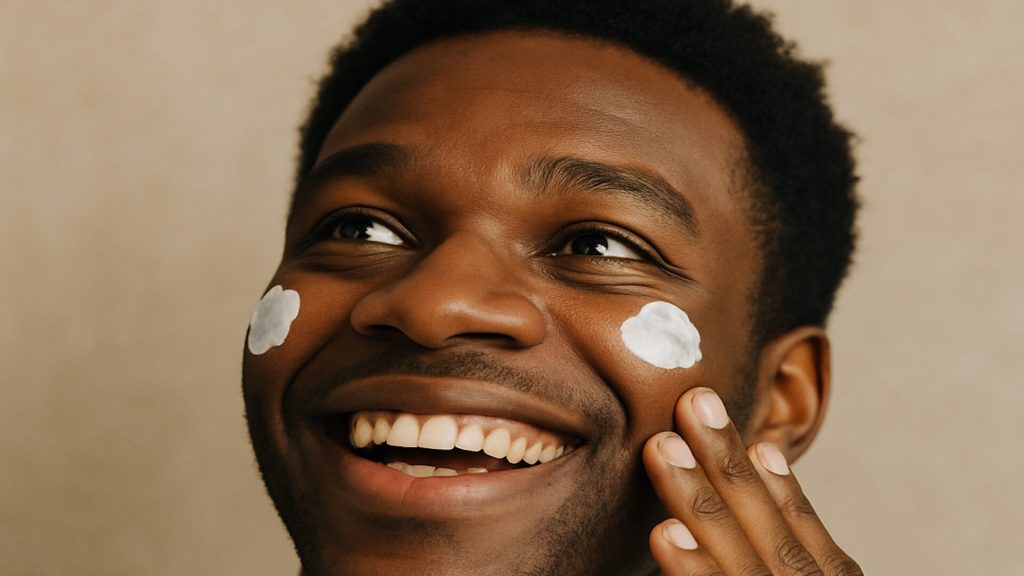
Opt for formulations containing 2–5% niacinamide, as higher concentrations rarely offer added benefit and may increase irritation [10]. Serums are ideal for oily or combination skin, while creams work well for drier skin.
Application Tips
Apply niacinamide serum after cleansing and before heavier creams. Use gentle upward motions on the face and neck, twice daily for best results.
Layering Order Example:
| Step | Purpose | Example Product |
|---|---|---|
| Cleanser | Removes dirt & oil | Gentle Foaming Cleanser |
| Niacinamide Serum | Enhances barrier & tone | 5% Niacinamide Serum |
| Moisturiser | Locks in hydration | Lightweight Cream |
| Sunscreen (AM) | Protects from UV | SPF 30+ Broad Spectrum |
Table 2: Recommended layering order and application steps for niacinamide
Layering Tips
- Pair with hyaluronic acid for extra hydration.
- Use with retinoids in alternating routines for anti-ageing synergy.
- Always patch test before mixing new actives.
Who Benefits Most From Niacinamide?
Niacinamide suits all skin types, including sensitive and acne-prone skin. Its anti-inflammatory action helps calm redness and strengthen the barrier.
A Cutis study found niacinamide moisturisers improved rosacea-related redness and barrier function within 4 weeks [5].
Additionally, a 2015 New England Journal of Medicine study found that 500 mg oral niacinamide twice daily reduced the risk of nonmelanoma skin cancers by 23% in high-risk patients [11].
What Results To Expect
Visible improvements in tone, hydration, and texture occur gradually with consistent use.
| Timeline | Expected Results |
|---|---|
| 4 Weeks | Brighter tone, less redness |
| 8 Weeks | Improved texture, reduced pigmentation |
| 12 Weeks | Fewer fine lines, firmer appearance |
Table 3: Expected skincare results over a 12-week period
Potential Side Effects
Niacinamide is well-tolerated, with mild irritation rare below 5% concentration [10]. For sensitive users, start at 2% strength and increase as skin adjusts.
Conclusion
Niacinamide delivers proven, multi-dimensional benefits, particularly hydration, tone correction, barrier repair, and fine-line reduction. It is a safe, evidence-based addition to any skincare routine and suitable for all skin types.
For those seeking expert guidance, Monderma’s personalised skincare combines niacinamide with actives like tretinoin and azelaic acid, tailored by GPhC-registered prescribers. Start your free consultation to find your perfect formula and share this guide to help others discover niacinamide’s transformative potential.
Bibliography
- NHS. B Vitamins and Folic Acid. 2024.
- NIH. Niacin – Health Professional Fact Sheet.
- Tanno H, et al. Nicotinamide Increases Biosynthesis of Ceramides. Br J Dermatol. 2000.
- Elvehjem CA, et al. Conrad Arnold Elvehjem. J Am Chem Soc. 1937.
- Draelos ZD, Ertel K, Berge C. Niacinamide-Containing Facial Moisturizer Benefits Subjects with Rosacea. Cutis. 2005.
- Bissett DL, et al. Niacinamide: A B Vitamin That Improves Aging Facial Skin. Dermatol Surg. 2005.
- Snaidr VA, Damian DL, Halliday GM. Nicotinamide for Photoprotection. Exp Dermatol. 2019.
- Navarrete-Solís J, et al. Niacinamide 4% vs Hydroquinone 4% in Melasma. Dermatol Res Pract. 2011.
- Gehring W. Nicotinic Acid/Niacinamide and the Skin. J Cosmet Dermatol. 2004.
- Cosmetic Ingredient Review. Safety Assessment of Niacinamide. 2005.
- Starr P. Oral Nicotinamide Prevents Common Skin Cancers. NEJM. 2015.
- Healthline. Niacinamide: Skin Benefits, Risks, and More. 2018.
Join The Newsletter
Skin insights, delivered to you
Share this article if you found it helpful



More To Explore
Latest Articles For Your Skin
-
Understanding Pityriasis Rosea: Symptoms & Treatment
-
How To Spot Fake Skincare Products Online
-
CBD Skincare For Calming Redness & Irritation

-
How Fractional Laser Can Renew Damaged Skin
-
Wearable Sensors Used For Skin Condition Tracking

-
Ectoine: Skincare & Eye Care Barrier Protection

-
Baby Acne Myths & Facts Explained

-
Niels Ryberg Finsen: Pioneer Of UV Phototherapy

-
Allantoin Uses & Benefits For Daily Skincare
-
Chapped Lips: Causes & How To Treat Them